
Let’s get one thing out of the way: if you’ve been doing marketing for 10+ years, a lot of what you know has changed.
Not because you did anything wrong, but because AI blew the whole game up.
How people find you, how content gets written, how brand awareness is built, and what actually drives revenue impact has changed. The old playbook of posting content and hoping for the best has been replaced by something much more strategic: content marketing systems built around trust, expertise, and visibility.
But don’t panic. We’re going to break it down.
First, What Even Is SEO?
SEO stands for Search Engine Optimization. It’s basically how you get Google to notice your website and show it to people who are searching for things you offer. Think of it like raising your hand in class. SEO is how you get called on.
SEO is still important. You need a solid SEO foundation on your website. Without it, nothing else really works. It’s the boring but necessary stuff: page titles, keywords, site speed, links, and structure. Get it set up, then move on to the exciting stuff. This video dives deeper on SEO.
Okay, Now What’s GEO (or AEO)?
GEO stands for Generative Engine Optimization. AEO stands for Answer Engine Optimization. These terms are often used interchangeably.
They refer to how you show up when someone asks an AI platform like ChatGPT, Claude, or Google’s AI a question.
Instead of ranking on Google, you’re now trying to become the answer that AI gives.
That’s a major shift.
It’s not just about backlinks and page speed anymore. It’s about being the most trustworthy, relevant, and useful source of information on a topic. AI platforms want high quality content that demonstrates real expertise, creates value for learners, and helps users solve problems.
On Page vs. Off Page: What’s the Difference?
Think of your website like a house.
On page SEO and GEO is everything inside the house: your service pages, FAQs, blog posts, case studies, internal links, headings, keywords, and content structure. It’s everything you directly control that helps search engines and AI understand who you are, what you do, and why you’re credible.
Off page SEO and GEO is everything outside the house: backlinks, industry publications, LinkedIn content, podcast appearances, Reddit discussions, YouTube videos, directory listings, reviews, testimonials, and third party mentions.
You don’t fully control these channels, but they help build authority, visibility, and trust.
But here’s where things get interesting.
What Actually Works for GEO?

Off-page content is where GEO really shines right now as of June 2026.
The top platforms AI regularly pulls information from include:
- Reddit. AI loves Reddit because it’s full of real human opinions and discussions.
- LinkedIn. Professional content and thought leadership often get referenced because they’re tied to real expertise.
- Wikipedia. Still one of the most influential sources for AI training and answers.
- YouTube. Video content and transcripts are being indexed heavily.
So if you’re only publishing content on your website and calling it a day, you’re leaving a lot of visibility on the table.
Modern content marketing isn’t just about publishing. It’s about distribution. The brands building the most authority today understand that every piece of content needs to live across multiple channels.
What Most People Get Wrong About GEO
One of the biggest misconceptions about SEO and GEO is that they’re quick wins.
They’re not.
Google, ChatGPT, Claude, Perplexity, and other AI search engines need time to understand who you are, what you do, and whether you’re a credible source on a topic. You’re essentially teaching algorithms how to categorize your expertise.
That doesn’t happen overnight.
When I was Chief Marketing Officer for a global technology company, we implemented a long term content strategy focused on strategic podcast appearances, educational blog content, and participation in online communities like Reddit. We didn’t see meaningful traction immediately, but around the six month mark, we started seeing a noticeable increase in search visibility, inbound traffic, and lead generation.
The companies that win are usually the ones that stay consistent long enough for the algorithms to build confidence in their expertise.
Think of GEO as building a reputation, not running an advertisement.
Keyword Strategy and Content Clusters

This is the backbone of your entire content marketing strategy. A strong content strategy starts with understanding two things:
Message market fit and content market fit.
In simple terms:
Are you telling the right story to the right audience?
And are you creating content they actually care about?
The best content marketing strategy doesn’t begin with keywords. It begins with understanding your audience’s frustrations, goals, questions, and buying decisions. Once you understand that, you can build content clusters around your actual business offerings. Picture it like a solar system. Your core business is the sun.
The planets orbiting it are your service areas. The things clients actually hire you for.
For a commercial construction company, that might include:
- Procurement
- Project Management
- Design Build
- Tenant Improvement
- Day 2 Services
Then within each of those clusters, you have supporting content. These supporting assets become part of your knowledge graph. The goal is to think like your ideal customer.
- What would they actually type into ChatGPT?
- What exact phrases would they search on Google?
If you don’t know who your audience is, you can’t answer those questions. That’s why understanding your target personas comes first. (this is part of our UNCOVER phase)
Once you’ve developed your keyword strategy, those keywords should naturally appear throughout your content creation process:
- LinkedIn posts.
- YouTube videos.
- Podcast interviews.
- Blog articles.
- Press releases.
- Website copy. (More on how to do that in this VIDEO)
- Social media captions.
You’re essentially teaching AI what your brand story, brand message, and brand narrative are all about. Over time, AI starts associating your business with those topics. You aren’t just creating content anymore. You’re building a digital reputation.
EEAT: The Secret Sauce of Good Content
Here’s where a lot of businesses get it wrong….
They ask AI to write an article, hit publish, and wonder why nothing happens. Search engines and AI platforms are smarter than that. They can identify content that feels generic, shallow, or disconnected from real experience.
That’s why they reward EEAT.
EEAT stands for:
- Experience
- Expertise
- Authority
- Trust
- More on EEAT HERE
The best content marketing doesn’t feel like marketing. It feels like expertise.
It creates an emotional connection with the reader because it contains real stories, real lessons, and real perspectives.
This is where brand storytelling becomes so powerful. People don’t remember facts. They remember compelling stories. They remember compelling narratives. They remember how something made them feel.
That’s why customer success stories, testimonials, and project case studies consistently outperform generic content.
They operate on a deeper level. They create emotional connection. They build trust.
And they leave a lasting impression. You can absolutely use AI to help you write. But the final product still needs your perspective, your experience, and your insights. That’s what separates valuable content from noise.
The BUILD Framework: How to Actually Do This
Let’s say your construction company just finished a big project. You want to write a case study and a LinkedIn post. Here’s how to not be boring about it.
Don’t: Post a couple of stats and call it a day.
Do: Use the BUILD framework create by Spaces Uncovered. (this has EEAT imbedded into it):
- B — Background: What was the project? Who else was involved? What was at stake?
- U — Urgency: What problem needed solving, and why was it urgent? Why were you the right fit? (This shows your experience.)
- I — Intention: What was the project trying to achieve? Why was your team best positioned to do it? (This shows your expertise.)
- L — Labor: How did your team actually solve it? Who was involved? What’s the behind-the-scenes story only insiders would know? Name names. (This builds trust.)
- D — Difference: What changed for the community or end user because this project existed? (This establishes authority.)
If you write your content this way, AI will notice. And so will humans — which is the whole point.
How Do You Know It’s Working?
One of the biggest mistakes businesses make is measuring success with likes and impressions alone. Those metrics can be useful, but they don’t tell the full story.
What actually matters?
• Brand awareness
• Engagement depth
• Website inquiries
• Qualified leads
• Conversion rates
• Content performance
• Attribution to opportunities
• Revenue impact
A post with 50 likes that generates a meeting is worth more than a post with 10,000 views that generates nothing.
Yes, This Is a Lot. That’s Kind of the Point.

Marketing isn’t simple anymore. The days of posting randomly and hoping for the best are over.
A real content marketing engine looks like this:
• A well built website with strong SEO foundations
• A content marketing strategy built around your ideal customer
• Content clusters that align with your real business offerings
• A clear brand story, brand values, and brand narrative
• Consistent brand storytelling across channels
• High quality content distributed across multiple platforms
• LinkedIn, podcasts, YouTube, blogs, newsletters, and social media working together
• Compelling stories pulled from your projects, team, and clients
• Customer success stories and testimonials that reinforce credibility
• Strong calls to action that guide readers toward the next step
• Content creation guided by strategy instead of randomness
It’s multi layered. It’s a system.
But once it’s running, it compounds. Because you’re speaking to both the algorithms and the humans. And the humans are the ones who actually buy.
A Real Example From Spaces Uncovered
We’ve seen this play out firsthand at Spaces Uncovered.
When we launched our website in April, our website was built from scratch, but the off-site content was not. For years, I had been sharing insights on LinkedIn, writing newsletters, documenting real project experiences, and publishing content based on actual conversations happening within the built environment industry.
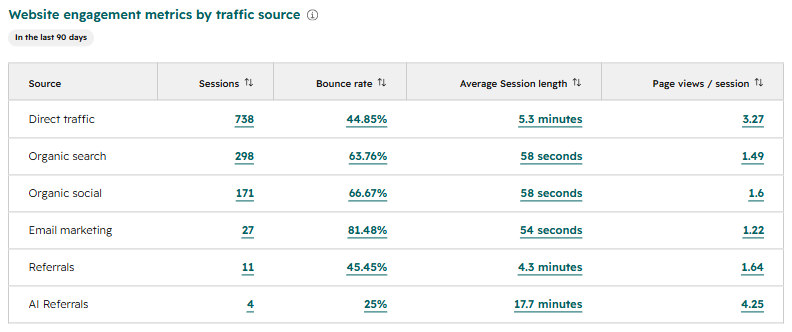
Because there was already a digital footprint of authentic expertise behind my name, we began seeing website traffic from AI platforms like ChatGPT and Claude within roughly 90 days of launching the website.
That’s unusually fast. Typically this takes 4-6 months. In the above website analytics, you can see 4 visitors came from being cited on AI. (3 from ChatGPT, 1 from Claude as Claude is still fairly new). These look to be fairly qualified based on how long they cruised the website and how many pages/tabs were viewed.
Most companies should expect GEO to be a longer term investment.. its a long term play but it reinforced something we’ve seen repeatedly: AI platforms appear to reward consistency, expertise, and original insights more than perfectly optimized marketing content.
The goal isn’t to game the algorithm. The goal is to become a source worth referencing.
The Takeaway
The future belongs to the companies that create high quality content worth citing, sharing, and remembering. When your content strategy is rooted in expertise, authenticity, and relevance, the rankings, visibility, conversions, and revenue impact tend to follow.
Now go teach those machines something worth remembering.
About the Author
Alexa Bustamante is the Founder of Spaces Uncovered, a strategic storytelling, visibility, and automation consultancy serving the built environment industry. With more than a decade of experience spanning interior design, business development, marketing, and executive leadership roles, she helps developers, architects, builders, manufacturers, and real estate organizations improve their visibility across Google, AI search platforms, and digital channels.
The work at Spaces Uncovered focuses on the intersection of storytelling, SEO, GEO, AI search visibility, and business development for the built world.